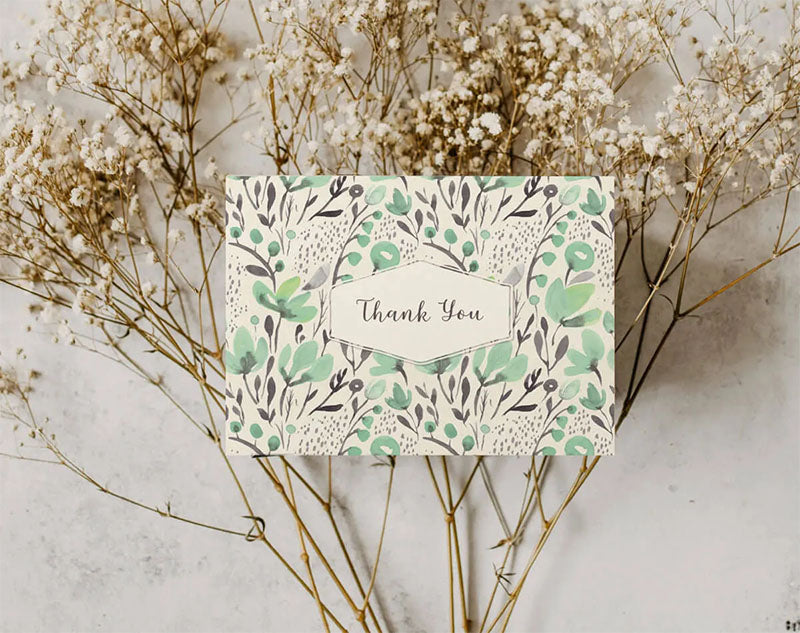
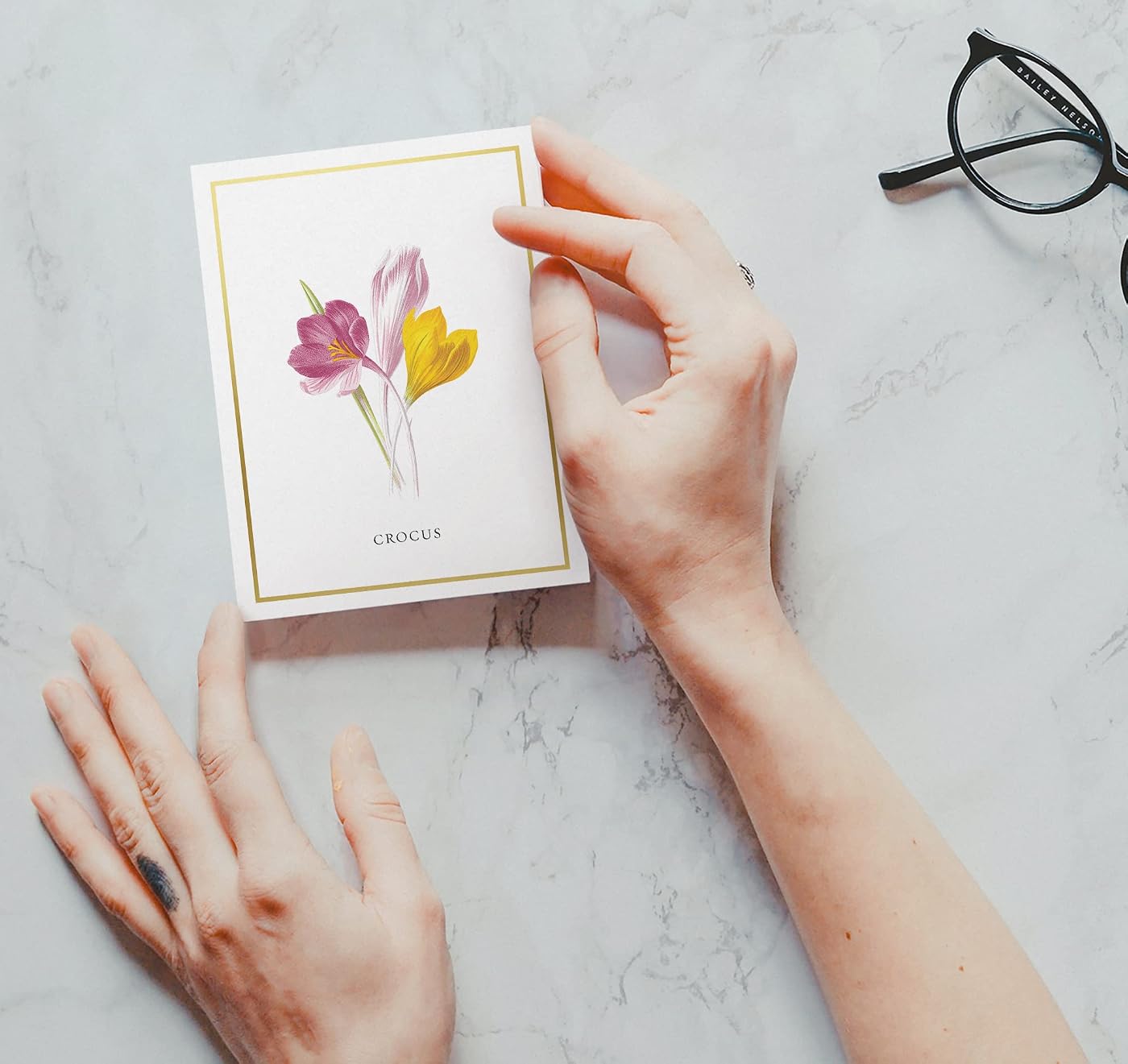
Most people know what they want to say in a card. The hard part is getting it onto the paper. This guide walks through how to write a greeting card in five simple steps, with examples, opening lines, closings and links to our message guides for every occasion.
A good card message is usually three to five sentences. It does not need to be clever. It needs to sound like you and say something specific about the person you are writing to.
Article contents
- Where to Write in a Card
- How to Write a Card in Five Steps
- How Long a Card Message Should Be
- How to Start a Card
- How to End and Sign a Card
- Matching the Tone to the Person
- What to Write for Each Occasion
- Adding a Quote or Bible Verse
- When You Do Not Know What to Say
- Tips for Writing It by Hand
- Mistakes to Avoid
- Frequently Asked Questions
Where to Write in a Card
Open the card so the fold is on your left. Most people write on the right inside panel, starting near the top. If the card has a printed message on the right, write under it or on the left panel instead.
- Blank cards: Start your greeting about an inch from the top of the right panel and work down. Use the left panel for a quote, a verse or a longer note if you need more room.
- Folded note cards: Write on the inside right. A short message fits easily, and the back stays clean.
- Flat cards: Write on the back, leaving a margin on every side.
The envelope matters too. Address it neatly, add a return address and use the right postage. Our postage guide covers what a standard card needs.
How to Write a Card in Five Steps
This simple pattern works for almost any occasion, from birthdays to sympathy cards.
- Start with a greeting. Use the name you call them. "Dear Grandma," "Hi Sam," or just "Mom," all work.
- Say why you are writing. "Happy birthday." "Congratulations on the new job." "Thank you for the beautiful blanket." One line is enough.
- Add one specific thing. A memory, a trait you admire, or what their gift or help meant to you. This is the line people remember.
- Look ahead. Wish them something for the year, the new chapter or the days ahead. "I hope this year brings you more time on the lake."
- Close and sign. Pick a closing that fits how well you know them, then sign your name.
Here is how that looks in a birthday card:
"Dear Dad, happy birthday. I still think about the summer you taught me to fish on Grandpa's dock, and how patient you were when I lost three lures in one afternoon. I hope this year brings you plenty of quiet mornings on the water. Love, Katie"
And in a thank you card:
"Hi Sarah, thank you so much for watching the kids last Saturday. We had our first real dinner out in months, and they have not stopped talking about your pancakes. Let us return the favor soon. With thanks, Mike and Jen"
How Long a Card Message Should Be
Three to five sentences fits most cards and most occasions. That is long enough to say something real and short enough to write without a rough draft.
- Coworkers, neighbors and group cards: One or two sentences.
- Friends and family: Three to five sentences.
- Milestones, sympathy and close relationships: As long as you like. A full panel is fine.
If you are signing a card that other people will sign too, keep it to one line and leave room for everyone else.
How to Start a Card
The first line is often the hardest. Any of these can get you going.
- Happy birthday to someone who makes every year better.
- I was thinking about you this week and wanted to send a note.
- Congratulations. You worked so hard for this.
- Thank you for being there when it counted.
- I was so sorry to hear about your loss.
- It has been too long since I wrote you a real letter.
- I saw this card and thought of you right away.
- Happy anniversary to two of my favorite people.
- I hope this card finds you feeling a little better.
- Merry Christmas from all of us.
How to End and Sign a Card
End with a short wish or a look ahead, then add a closing and your name.
- Family and close friends: Love, All my love, Hugs, Love always,
- Friends: Warmly, Cheers, Talk soon, Your friend,
- Thank you cards: With thanks, Gratefully, With gratitude,
- Sympathy cards: With sympathy, Thinking of you, Holding you close, With love and prayers,
- Work: Best wishes, Kind regards, All the best,
Sign the name they know you by. For couples and families, list the names in the order that reads naturally, such as "Love, Mike, Jen, Ava and Leo." Our guide to how to sign a card has closings for every occasion.
Matching the Tone to the Person
The same occasion can call for very different words depending on who will read the card.
- Close family: Be personal. Use a nickname, an inside joke or a memory only the two of you share.
- Friends: Warm and light works well. A little humor is welcome for birthdays and everyday cards.
- Coworkers and bosses: Friendly and brief. Mention something about working together rather than their personal life.
- Someone grieving: Gentle and simple. Skip humor, and do not try to explain the loss.
- People of faith: A blessing, a prayer or a Bible verse can mean a great deal if you know they would welcome it.
What to Write for Each Occasion
Each of these guides has ready-to-use messages you can copy as they are or change to fit.
Birthday
Start with our main guide to what to write in a birthday card. For specific people, see birthday wishes for Mom, Dad, your husband, your wife, your sister, your brother, your son, your daughter, Grandma, Grandpa, a friend and a coworker. For milestone years, see 50th birthday wishes and 60th birthday wishes. If you missed the day, our belated birthday wishes can help.
Thank You
Our guide to thank you card messages covers gifts, help, hosting and work. There are also guides for thank you for the gift, wedding thank you cards, teacher thank you cards and funeral thank you cards.
Sympathy
Start with what to write in a sympathy card or our short sympathy messages. For specific losses, see messages for the loss of a mother, the loss of a father, the loss of a pet and a coworker's loss.
Weddings and Anniversaries
See what to write in a wedding card, engagement card messages, bridal shower wishes and anniversary card wishes.
New Baby, Graduation and Congratulations
See baby shower wishes, baptism wishes, graduation wishes, congratulations messages and retirement card messages.
Get Well and Thinking of You
See get well soon messages, thinking of you and encouragement messages and friendship messages. For a longer note, our snail mail ideas can help you write a letter to a friend.
Holidays
See Thanksgiving messages, Christmas card messages, Hanukkah wishes, New Year wishes, Valentine's Day messages, Easter wishes, Mother's Day messages and Father's Day messages.
Faith
For Christian cards, see religious birthday greetings, Christian birthday wishes for Dad, Christian anniversary wishes, Christian sympathy messages and religious Christmas card messages.
Work
See birthday wishes for your boss, farewell messages for a coworker and birthday wishes for a coworker.
You can also use our message finder to pull up ideas by occasion and recipient.
Adding a Quote or Bible Verse
A short quote or verse at the top of the left panel can carry a card when you are short on words. Write your own message under it or on the right panel so the card still sounds like you.
- Quotes: See our gratitude quotes, grief quotes, nature quotes, dog quotes and cat quotes.
- Bible verses: See our verses of encouragement, verses for wedding cards, verses for graduation and Thanksgiving verses.
Always add the name of the person you are quoting or the verse reference. One quote is enough. Two can crowd the card.
When You Do Not Know What to Say
Sympathy cards, get well cards and cards for hard times are the ones people put off. A few honest words are better than no card at all.
- Say that you are sorry, or that you are thinking of them.
- Share one good memory, if you have one.
- Offer something specific, like a meal on Tuesday or a ride to an appointment, rather than "Let me know if you need anything."
- Keep it short. "I am so sorry. I am thinking of you and your family." is enough.
Skip phrases that try to explain the loss or the illness. Being there matters more than finding the perfect words.
Tips for Writing It by Hand
- Draft it first. Write your message on scrap paper or your phone, then copy it into the card. This saves a lot of crossed-out words.
- Use a pen that will not smear. A fine felt tip or gel pen works well on most card stock. Let the ink dry before you close the card.
- Watch your spacing. Start a little higher than feels natural so you do not run out of room at the bottom.
- Keep a box of cards at home. It is much easier to send a card on time when you have one in the drawer. A boxed set of blank cards covers birthdays, thank yous and everything in between.
- Mail it early. Give a mailed card about a week to arrive. Our card reminders can help you remember the dates.
Mistakes to Avoid
- Signing only your name with no message at all.
- Spelling the person's name wrong. Check it, especially for in-laws and coworkers.
- Writing the same message in every card. Change at least one line for each person.
- Inside jokes in a card other people will read, such as a group card or a wedding card shown at the reception.
- Jokes about age, weight or health, unless you know for sure they will laugh.
- Waiting so long that you skip the card. A late card is still better than none.
Frequently Asked Questions
What do you write in a greeting card?
Start with a greeting, say why you are writing, add one specific memory or detail, wish them well and sign your name. Three to five sentences is enough for most cards.
Which side of a card do you write on?
Most people write on the right inside panel. If the right panel has a printed message, write under it or use the left panel.
How do you start a card message?
Use their name, then get straight to the point: "Happy birthday," "Congratulations," "Thank you for" or "I was so sorry to hear." A short, direct first line is easier to write and easier to read.
How do you end a card?
Close with a wish or a look ahead, then a sign-off such as "Love," "Warmly," "With thanks" or "With sympathy," and your name.
Is it OK to write a short message in a card?
Yes. One or two sincere sentences are better than a long message that does not sound like you, especially for coworkers and group cards.
Every Twigs Paper set is blank inside, so there is room to write exactly what you want to say. Each box is printed on 100% recycled paper and comes with an envelope for every card. Browse the full shop or see more ideas on our What to Write page.